Solar Batteries and Off-Grid Storage in Pakistan: A 2026 Buyer’s Guide
Grid outages, rising tariffs, and unpredictable load-shedding push more Pakistani households toward energy independence every year. In 2026, a solar system is only as reliable as the storage behind it. That is why solar batteries have become the deciding factor between a setup that keeps the lights on and one that dies the moment the sun sets.
This guide walks through how battery storage works, what sizing looks like for a typical Pakistani home, and how to avoid the costly mistakes that leave buyers with dead cells within two years. If you want dependable backup, understanding storage is the first step.
Why Solar Batteries Matter More Than Ever in Pakistan
Solar panels only produce power while the sun shines. Without storage, every unit generated after 5 PM is lost, and your home falls back on the grid or a generator. Batteries capture surplus daytime production and release it at night, during outages, or on cloudy days.
With WAPDA and DISCO tariffs climbing, storing your own generation is cheaper than buying peak-hour units. A well-matched battery bank also protects sensitive appliances from the voltage swings common across many feeders.
The Real Cost of Skipping Storage
Many first-time buyers install panels alone to save money. The result is a system that produces plenty at noon but provides zero backup during evening outages. Retrofitting storage later costs more than planning for it upfront. Working with reliable local experts from the start saves you from expensive rework.
Types of Solar Batteries Available
Not all batteries are equal. Chemistry, depth of discharge, and cycle life all change the true cost per usable kilowatt-hour. Here is how the main options compare for Pakistani conditions.
| Battery Type | Cycle Life | Usable Depth | Best For |
|---|---|---|---|
| Lead-acid (tubular) | 500–1,200 | ~50% | Tight budgets, light backup |
| Lithium (LiFePO4) | 4,000–6,000 | ~90% | Daily cycling, long term |
| Gel / AGM | 600–900 | ~50% | Low-maintenance backup |
Lithium iron phosphate now dominates new installs because its longer life offsets the higher upfront price. Over eight years, a lithium bank often costs less per usable unit than replacing lead-acid packs twice. When you compare solar batteries in Pakistan, weigh cost per cycle, not just sticker price.
Matching Battery Voltage to Your Inverter
A 48V lithium bank pairs efficiently with modern hybrid inverters and reduces cable losses compared to older 12V or 24V setups. Always confirm your inverter’s charge profile supports your chosen chemistry before buying.
How Do You Size a Battery Bank for a Pakistani Home?
Sizing starts with your nightly load, not your panel count. List the appliances you need during an outage, estimate their run hours, and add a safety margin.
- Add up watt-hours: fans, LED lights, TV, router, and a fridge overnight.
- Divide by battery voltage to get amp-hours needed.
- Adjust for usable depth: lithium delivers roughly 90%, lead-acid only 50%.
- Add 20% headroom for cloudy days and future appliances.
A modest three-bedroom home running fans, lights, and a refrigerator through the night typically needs 5–10 kWh of usable storage. Oversizing wastes money; undersizing leaves you in the dark by 2 AM.
Pairing Storage With the Right Inverter
Your inverter controls how power flows between panels, batteries, and loads. A hybrid model manages all three intelligently and switches to backup within milliseconds. Before finalizing your bank, check the current solar inverter price in Pakistan so your storage and inverter budgets align.
Off-Grid vs Hybrid Storage Strategies
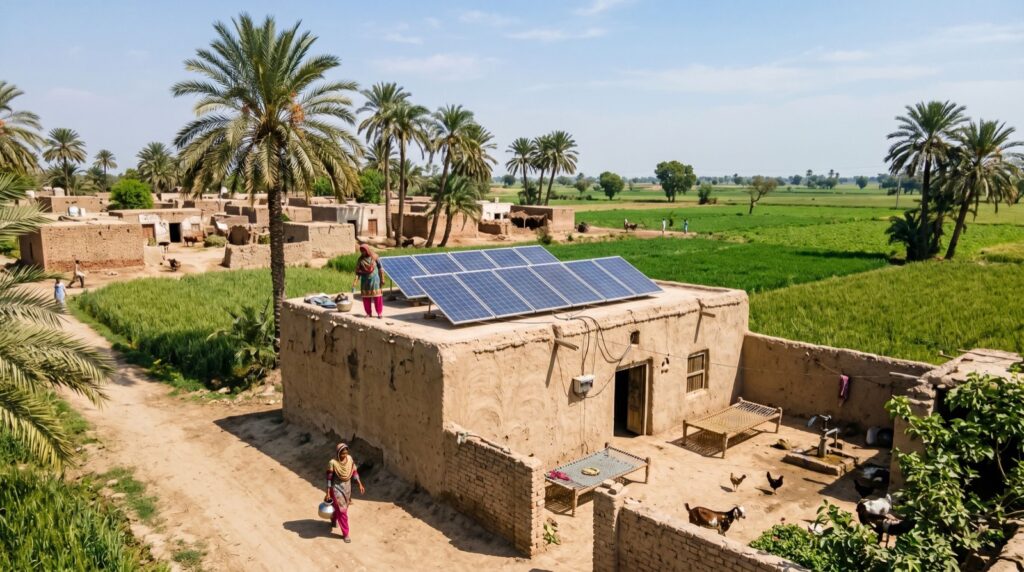
True off-grid systems disconnect from WAPDA entirely and rely fully on storage. They suit remote farms and villages where the grid is unreliable or absent. Hybrid systems, by contrast, keep a grid connection for backup and net metering while still storing surplus.
For most urban and semi-urban homes in 2026, hybrid is the smarter choice. You get outage protection plus the option to export excess power. According to the International Energy Agency, distributed solar with storage is among the fastest-growing energy segments across South Asia.
- Off-grid: full independence, larger battery bank, higher upfront cost.
- Hybrid: grid backup, net metering, smaller storage needed.
- Grid-tied only: cheapest, but no outage protection.
Maintenance Tips to Extend Battery Life
Even the best battery fails early if abused. A few habits dramatically extend service life and protect your investment.
- Keep batteries in a cool, ventilated space; heat is the number-one killer.
- Avoid draining lead-acid below 50% state of charge.
- Check lithium BMS alerts and firmware periodically.
- Keep terminals clean and connections torqued to spec.
From experience, the single most common failure we see in the field is lead-acid banks cooked by poor ventilation in a closed store room. A simple exhaust fan often adds two extra years of life.
Understanding Battery Warranties and Cycle Ratings
A warranty number means little without context. Lead-acid warranties are often short and prorated, while lithium warranties usually guarantee a throughput figure or a fixed number of years. Read the fine print before you commit.
Cycle rating is the clearest measure of value. A lithium bank rated for 6,000 cycles at 90% depth delivers vastly more usable energy over its life than a lead-acid pack rated for 1,000 cycles at 50%. When you divide total system cost by lifetime usable kilowatt-hours, lithium frequently wins despite the higher upfront price.
Reading the Datasheet Like a Pro
Look beyond capacity. Check the maximum continuous discharge current, the operating temperature range, and whether the battery management system offers Bluetooth or app monitoring. These details determine whether the bank can actually run your loads in Pakistani heat.
Charging Strategy for Long Battery Life
How you charge matters as much as what you buy. Aggressive fast charging in high heat stresses cells and shortens life, while a smart charge profile keeps them healthy for years.
- Set the correct absorption and float voltages for your chemistry.
- Avoid charging lithium below freezing, though this is rarely an issue locally.
- Let a hybrid inverter prioritize solar charging over grid charging when possible.
- Enable temperature compensation if your inverter supports it.
A practical field tip: schedule heavy appliance use for midday when panels are producing, so your batteries end the afternoon fully charged and ready for the evening. This small habit reduces overnight depth of discharge and extends bank life measurably.
Frequently Asked Questions
How long do solar batteries last in Pakistan?
Lithium LiFePO4 batteries typically last 8–12 years with daily cycling, while tubular lead-acid units last 2–4 years depending on depth of discharge and heat exposure. Cooler placement extends both.
Can I run air conditioners on solar batteries?
Yes, but AC units draw heavy loads. You need a larger lithium bank, a capable hybrid inverter, and enough panels to recharge quickly. Inverter ACs paired with 10 kWh or more of storage work best.
Are lithium batteries worth the higher price?
For daily use, yes. Lithium delivers far more cycles and deeper usable capacity, so the cost per stored unit over its lifetime is usually lower than repeatedly replacing lead-acid packs.
Do I need batteries if I have net metering?
Net metering alone does not protect you during outages, since grid-tied inverters shut off when the grid fails. Batteries are essential if you want backup power during load-shedding.
Conclusion
Storage is the backbone of any dependable solar setup in Pakistan. By sizing your battery bank to your real nightly load, choosing the right chemistry, and pairing it with a capable hybrid inverter, you turn daytime sunshine into round-the-clock power. Compare quality solar batteries in Pakistan, plan for storage from day one, and lean on trusted installers to design a system that lasts. The result is lower bills, fewer outages, and genuine energy independence.